
The solution
See the cause. Choose the therapy that fits. Confirm it works.
NICaS is an FDA-cleared, non-invasive hemodynamic test. Two sensors, a few minutes, in the exam room you already have, run by your staff.
The device
Small device. Simple test.
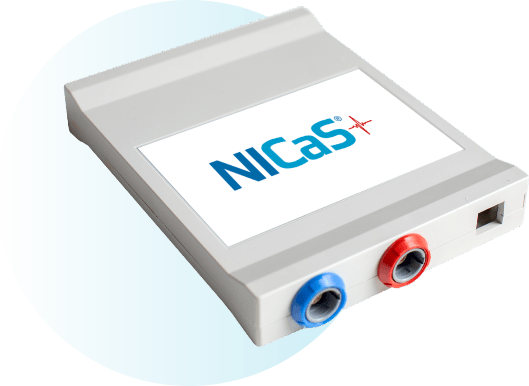
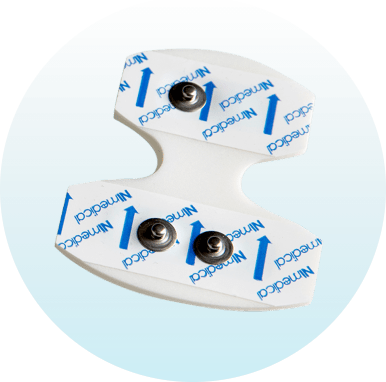
One small module, two single-use sensors on the wrist and opposite ankle. No needles, no undressing. The patient rests; the test takes a few minutes.
What the physician sees
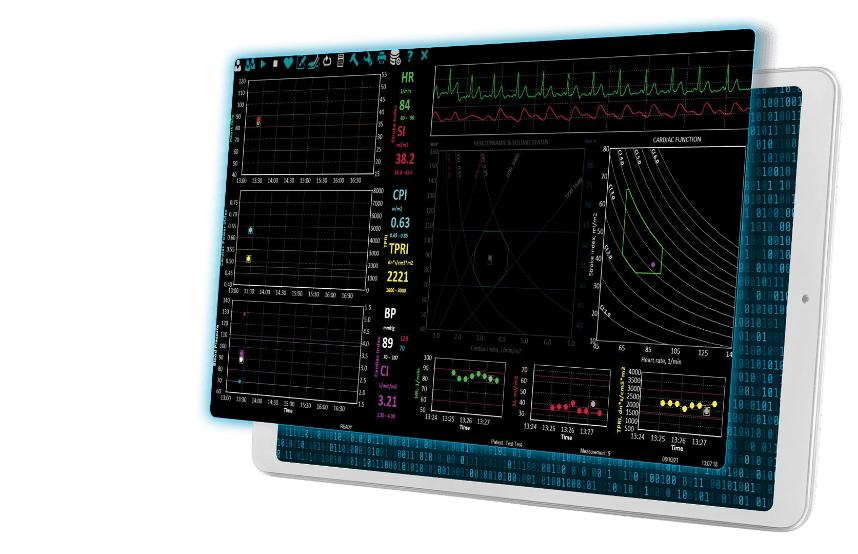
The numbers behind the number.
Stroke volume
Blood pumped with each heartbeat
Stroke index
Stroke volume adjusted for body size
Heart rate
Beats per minute
Cardiac output
Blood the heart pumps each minute
Cardiac index
Cardiac output adjusted for body size
Total peripheral resistance
How tightly the vessels are clamped down
The three patterns
Vasoconstriction
Tight vessels
Hyperdynamic
The heart pumping too hard
Mixed
Both
Same number on the cuff. Three different causes.
Decision support
Organized for the physician's judgment.
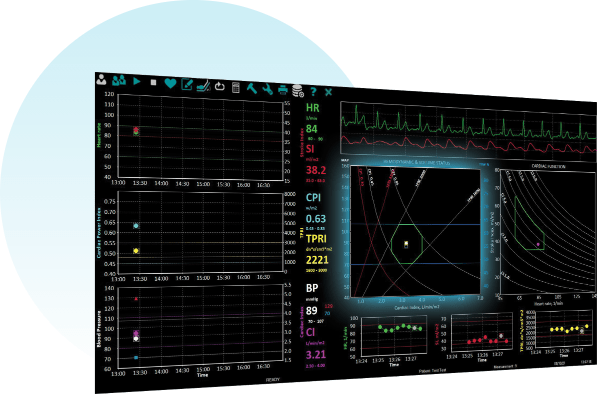
MedsEngine decision support organizes the hemodynamic profile and shows the basis for each consideration, so the physician can review it and decide. Results flow into the EHR the practice already uses, including Epic and Athena.
NICaS informs. The physician decides.
HDI Cloud
Proof, practice by practice.
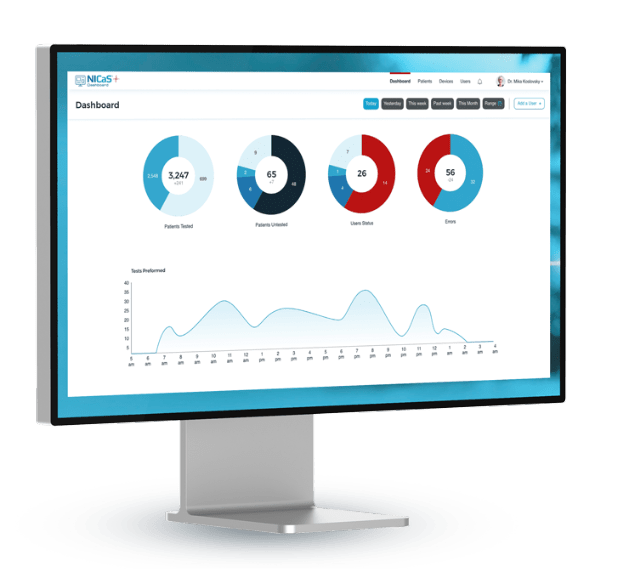
Practice and population dashboards track:
- Tests run
- Patients controlled
- Time to control
- Quality reporting on blood-pressure measures
HDI clinical services
People behind the platform.

Implementation
We set up the workflow with your team.
Training and certification
High-touch training for staff and clinicians.
24/7 live clinical support
While the patient is still in the room.
Utilization tracking
Monthly use and results, with retraining when needed.
ROI reporting
Site-specific results reported back to you.
Benefits for everyone in the room
One test. Four winners.
Patients
Painless, a few minutes, fewer failed medications and return visits.
Staff
Quick to learn, fits a routine visit.
Physicians
See the cause, choose therapy that fits, confirm it works.
Administrators
Faster control, fewer visits per patient, better quality scores.